This is the place to discuss not just allotments but all general gardening problems and queries which don't fit into the specific categories below.
(formerly allotments and tips, hints and problems)
I live in the north yorkshire area and used to have two goat farms local to me but they have unfortunatly stopped selling milk, i know you can buy it in your local tescopolis but it is pasturised i prefer unpasturised due to the far superior taste if anyone knows of any others in my area i would be most grateful.
thanks.
Respect to all, be kind to all and you shall reap what you sow.
old tree man,
aka..... Russ
i dont know about england, but it is illegal to sell milk straight from the goat in scotland! I have two goats and was worried about the surplus milk eventually! but there is nothing in the scottish law to say you cant swap it for something else....would England be the same i wonder?
When i used to buy it the milk was unpasturised and it tasted great , the good thing about it was that the surplus was freezable.
I have just made some cracking ginger beer shame you were not closer i would swap straight away
Respect to all, be kind to all and you shall reap what you sow.
old tree man,
aka..... Russ
dunno about UK anymore, but in NZ you are not allowed to sell unpasteurised (and therefore unheavily licensed, loads of requirements etc) milk, goats or otherwise for human consumption. However you are allowed to sell unpasteurised, unregulated milk for pet consumption. I don't sell a lot, but I do sell milk for cats occasionally, and I don't ask what the purchasers intend to do with it (and nor do they tell em except for a knowing smile).
There are many different ways to make yoghurt but how we do it is -
If you are starting - Heat milk to 60 degrees (if you do not have a thermometer, it is the ability to place a finger (washed of course ha!) and if you can hold it for approx 3 seconds, you are about correct). This temperature kills the bad bacteria but not the good bacteria. Take the milk off the stove and allow to cool to 35/40 degrees (body temperature then add a small carton of natural yoghurt (later you can keep a portion of the yoghurt aside to start the next batch - think you can do this about 4 times safely, and then need to start again as bacteria builds) stir and then leave aside for 6 to 8 hours - near the wood stove is good (if you have one) or else in a warm area. At this point you can add all sorts of berries, honey, jam, whatever to your own particular tastes.
There are all sort of modern ways to do this i.e., specifically designed thermos type equipment and other machines but we do it as above, simply.
The Bedouins used to make their yoghurt in a goat skin bag, hung between the back legs of a female camel to keep it cool ------- so you can see that the systems are many and varied ha!
Hiya -- Moggy - in NZ, technically it is still legal to sell raw milk for human consumption), 5 liters at a time, at the farm gate. But your facility still must be MAF approved. I sell my excess (when I have any) to some dog and alpaca breeders.
You can make cheeses from any pasteurised milk, but it does affect the flavour somewhat, and the food purists (ie the French) shudder at such a prospect. We make our cheesed from our raw goats' and cows' milk.
maggienetball wrote:Excuse my ignorance but can you make goats cheese from pasteurised goats milk?
I don.t know much about cheese making and am interested to know which is the best to start with if you're a novice, goats, sheeps or cows?
To your first question - yes, you can.
Your second is a bit more difficult... Or rather, it depends on what milk you have best access to. Expect to need some practise runs, so if you have to pay a lot of money for the milk, start off with the cheapest! But of course there are differences between the types of milk, too; even between milk from different types of cow (Jersey or HF, for example - the first is much fatter). I don't think any of them is more difficult, though.
Ina
I'm a size 10, really; I wear a 20 for comfort. (Gina Yashere)
farmerdrea wrote:Hiya -- Moggy - in NZ, technically it is still legal to sell raw milk for human consumption), 5 liters at a time, at the farm gate. But your facility still must be MAF approved. I sell my excess (when I have any) to some dog and alpaca breeders.
Ah Andrea we meet again lol.
I didn't realise that you could sell it at the farm gate , how do you get MAF approved?
We regularly make a soft cheese (call it farm cheese) from our goats milk. Really, really easy and tastes great as well.
I will give you the recipe per ltr so you can than just adjust it depending on how much milk you have at the time.
To a saucepan, add to each ltr of goats milk, 2 teaspoons of salt (if you like a fetta style cheese you can add more), 2 tablespoons of apple cider vinegar (now depending on the brand you may need a bit more - good quality from a health food shop is probably best but you can use cheaper brands but you will need to add more). Stir gently and only occasionally.
Bring ingredients just to the boil and then turn off and let cool. When cool enough (blood temperature) you can add various herbs, honey - whatever you would like to flavour the cheese with although it is nice left plain as well.
When cool strain through muslin (the whey can then be used to make whey cheese if you like that or given to other animals i.e., pigs love it but it can be mixed into chicken mash - all sorts of feeds).
Depending on the weather, hang overnight (if cool you can hang it longer for a dryer cheese)





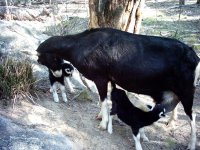



 I have two goats and was worried about the surplus milk eventually! but there is nothing in the scottish law to say you cant swap it for something else....would England be the same i wonder?